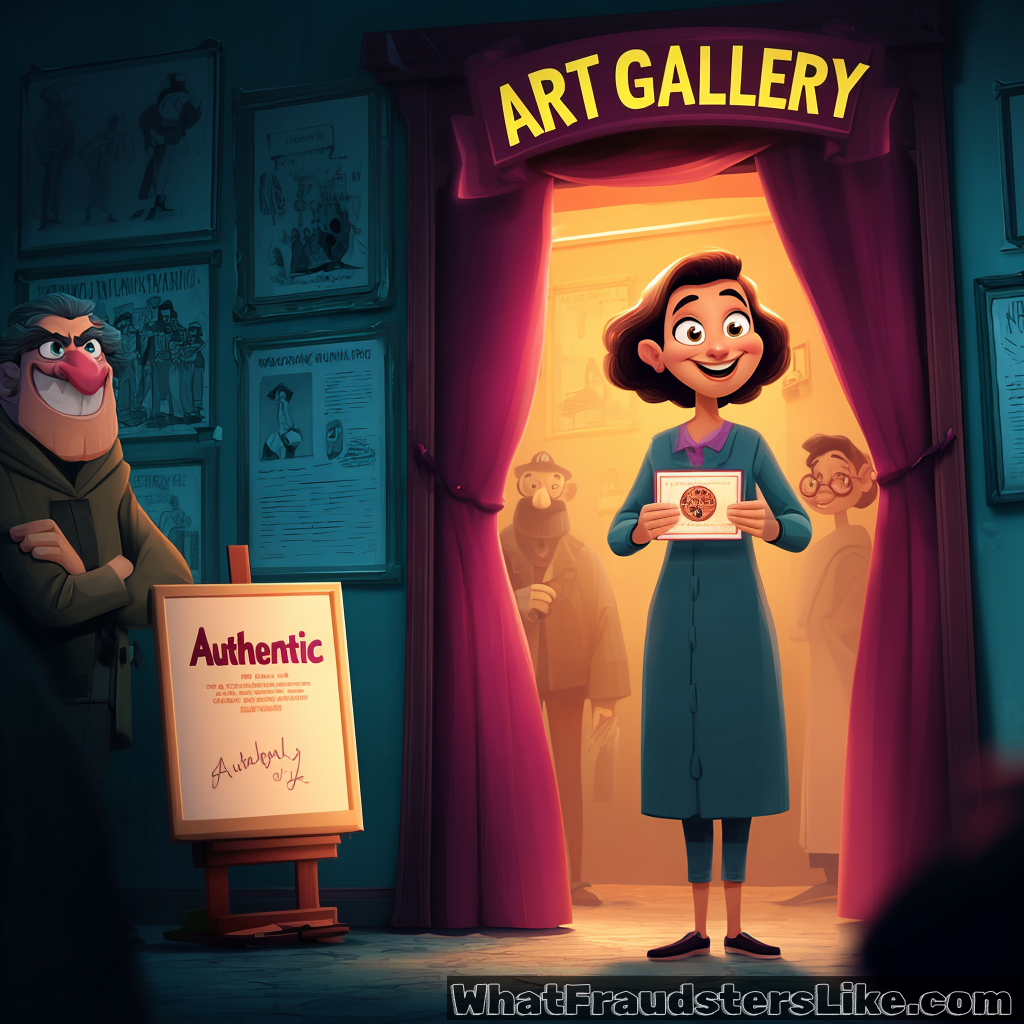
What if the most valuable part of an artwork… isn’t the paint?
The object may look convincing. The paperwork may look official. The narrative is what creates the premium. In art, collectibles, and memorabilia markets, value often depends on belief. And belief can be engineered.
Here is why fraudsters love these markets:
🎨 Art - A forged signature or fabricated backstory can turn an ordinary canvas into a "lost masterpiece." When attribution drives price, authorship becomes the attack surface.
🏈 Memorabilia - "Game-used." "Signed." "Limited edition." If the certificate of authenticity is compromised, the entire story behind the object collapses.
🪙 Collectible coins - A single grading notch can mean thousands in price difference. Counterfeit slabs or manipulated grading quietly inflate value.
🤝 Authentication chains - Forged certificates, fabricated provenance documents, and corrupted authenticators are often the real product. Not the object itself.
Still theoretical? From 1994 to 2008, a Long Island dealer supplied Knoedler Gallery - New York's oldest commercial gallery - with 40 forged Abstract Expressionist paintings attributed to Rothko, Pollock, and de Kooning. All were painted by one artist in a Queens garage. Civil settlements reached approximately $80 million[ref]. Buyers had trusted one of the most prestigious galleries in the country. That trust was the fraud.
In FBI Operation Bullpen[ref], a nationwide ring produced an estimated one million fake autographs, generating $100 million in fraudulent memorabilia sales. In 2025, a suspected successor scheme emerged in Indiana - industry observers called it potentially the largest counterfeit memorabilia operation ever, running for over two decades. The FBI raided. The alleged orchestrator confessed publicly. Then took his own life.
What makes these schemes work?
📖 Subjective valuation - There is no fixed pricing model. Perception drives price.
🧾 Provenance reliance - Buyers depend heavily on documentation that can be forged or selectively constructed.
🛡️ Reputational cover - Prestigious galleries, dealers, or authentication houses create legitimacy that bad actors exploit.
For fraud professionals, the lesson is simple: When value is narrative-driven, verification must be stronger than the story.
For collectors and buyers:
- Demand independent provenance verification - not just the seller's word
- Validate the authenticator, not just the certificate
- Be cautious of urgency and exclusivity pressure
For institutions and marketplaces:
- Strengthen due diligence on sellers and intermediaries
- Increase transparency around authentication processes
- Flag and monitor high-value private transactions with limited documentation
In markets where price depends on belief, fraudsters don’t sell objects. They sell certainty.