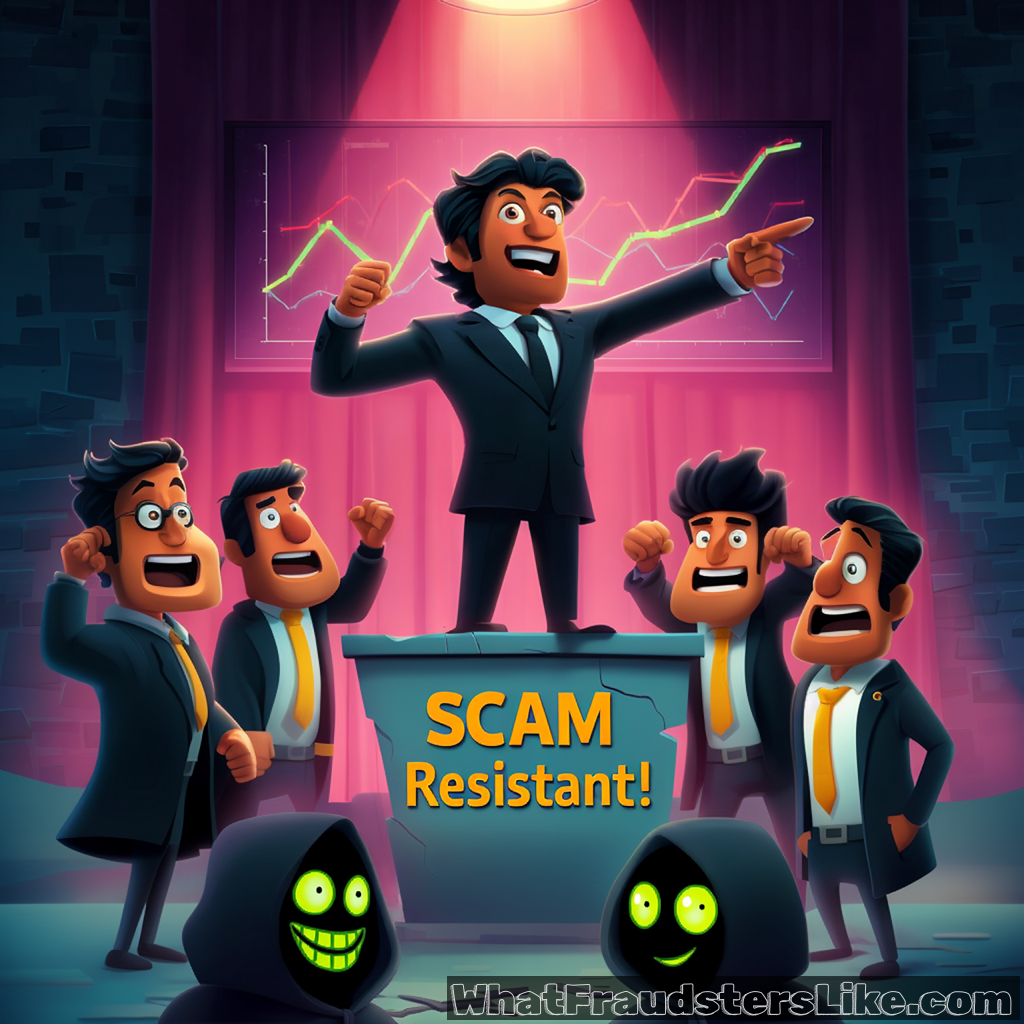
"Honestly? That would never happen to me."
Are you sure about that? So was everyone else.
There is a name for this. Psychologists call it the Dunning-Kruger effect - the cognitive bias where people with limited knowledge in a domain significantly overestimate their own ability. In cybersecurity and fraud, it is not just a quirk. It is an attack surface.
Here is how criminals exploit it:
🧠 Illusion of invulnerability - People assume fraud happens to "others" - the careless, the uninformed, the elderly. This optimism bias quietly disables vigilance. Email verification gets skipped. Wire instructions get trusted. Links get clicked without a second thought.
🎯 Expertise complacency - Fraud professionals, bankers, IT specialists - yes, even them. Familiarity breeds dangerous shortcuts: "I have seen this before." Criminals evolve constantly, and yesterday's pattern recognition does not protect against today's variation.
📉 Skipping friction - Confident people rarely double-check. Calling back to verify? Checking a domain? Slowing down a transfer? "No need." Attackers exploit urgency and overconfidence at the same time.
🏆 Authority bypassing safeguards - In senior roles, admitting uncertainty feels like weakness. A CFO certain they can spot a spoofed email may override the very controls designed to catch it - and the attacker is counting on exactly that.
🪤 Trusting surface signals - Overconfident targets are less likely to verify and more likely to rely on what looks right: a familiar logo, a convincing voice, a name they recognize. Attackers use impersonation, deepfakes, and spoofed domains precisely because confidence skips the second look.
The numbers do not care about confidence. A 2025 KnowBe4 survey of over 12,000 professionals found that 86% believed they could confidently identify phishing emails - yet nearly half had already fallen for a scam. In 2024, the FBI IC3 recorded losses exceeding $16.6 billion, a 33% jump from the year before. (And no, the irony of reading this and thinking "well, I already knew that" is not lost on me.)
Everyone is a target - CEOs, IT admins, Nobel laureates, news anchors, and yes, fraud professionals too. I wrote about this in more detail on my blog - link in the references.
🚨 To reduce the risk:
For individuals: Treat verification as a habit, not a judgment on your intelligence. Slow down financial decisions. Assume you can be deceived - because statistically, you can.
For organizations: Design controls that protect people from their own confidence. Mandatory callbacks and dual authorization. Technical enforcement over trust in individual expertise. Build systems that assume human bias exists at every level.
Confidence is valuable. Unquestioned confidence is exploitable.