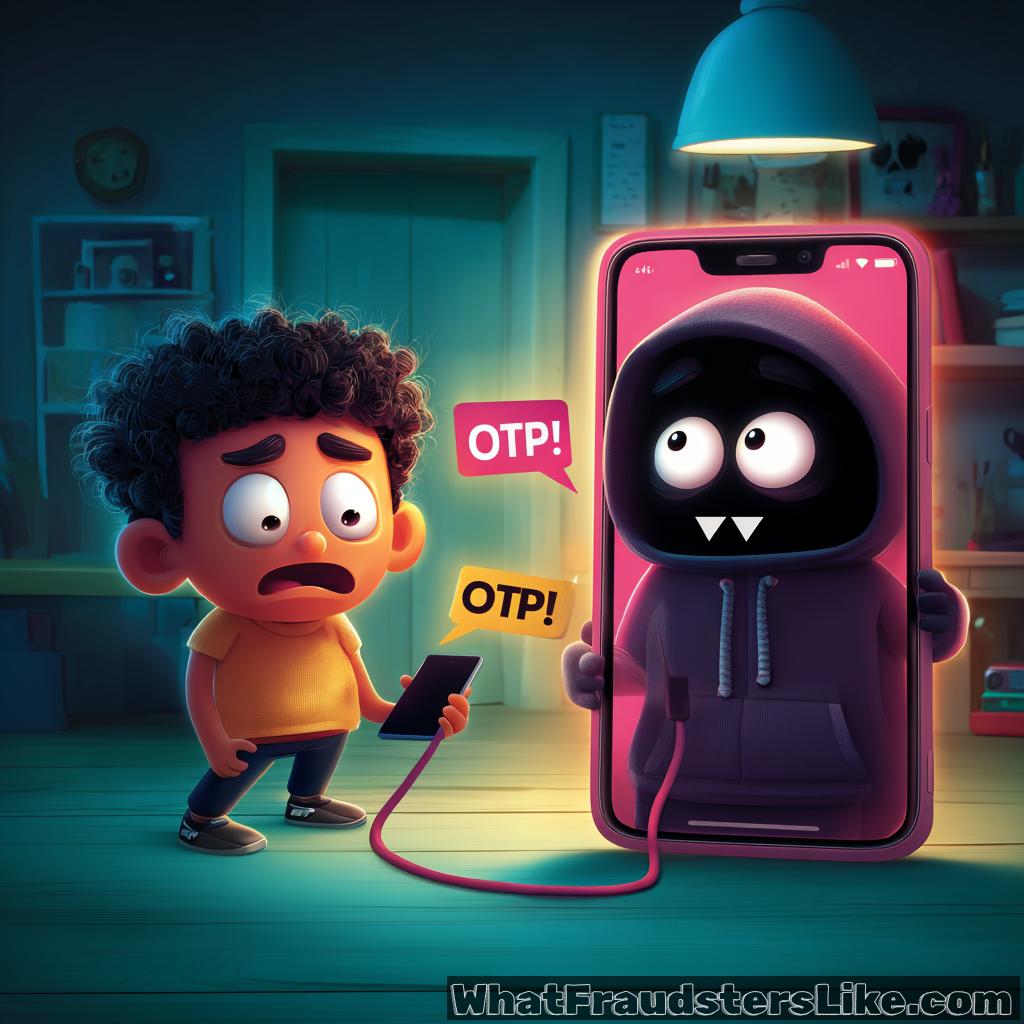
Your phone number feels personal. Safe. Fraudsters see it differently - as a master key to your entire digital life.
SIM swapping is deceptively simple: no malware, no hacking - just a well-crafted phone call, leaked personal data, and a process that trusts too easily. Once it works, everything else falls like dominoes.
Here's why attackers love it:
📱 One call to rule them all - Attackers social engineer a mobile carrier rep or exploit weak identity checks to port your number onto their SIM. Some even bribe insiders - reportedly for as little as $300 per swap.
🔐 SMS-based security collapses instantly - OTP codes, password resets, transaction confirmations - all delivered straight to the attacker. If SMS is your second factor, it's now their first.
🏦 Perfect bridge to bank and crypto fraud - With your number, criminals reset banking credentials, approve transactions, and drain accounts - often moving funds to crypto before anyone notices. Speed beats controls.
⚡ eSIM makes it even faster - Remote provisioning via QR codes has slashed attack time from hours to under five minutes. No plastic SIM required, no store visit needed.
🧠 Victims stay blind longer - Your phone "losing signal" feels like a carrier issue. By the time you realize something is wrong, accounts are locked, money is gone, and recovery turns painful.
🎯 Scales like a call center operation - SIM swapping doesn't require deep technical skills. Organized groups run it industrially, targeting hundreds of victims using credential dumps and scripted pretexts.
The numbers tell the story. The FBI's IC3 recorded 982 SIM swap complaints with $26 million in reported U.S. losses in 2024 - roughly $26,400 per victim. But these figures dramatically understate the problem since SIM swapping often enables other crimes categorized separately. The UK's Cifas reported a staggering 1,055% surge in unauthorized SIM swaps in 2024 - from 289 cases to nearly 3,000.
In March 2025, T-Mobile paid $33 million in arbitration after a single SIM swap enabled the theft of $38 million in cryptocurrency. The victim had an eight-digit PIN for heightened security. The perpetrator? A 17-year-old.
What actually helps reduce the risk?
For individuals: Avoid SMS as a sole second factor - use authenticator apps or hardware keys. Add carrier-level PINs and port-out protections today. Treat sudden signal loss as a red flag, not an inconvenience - contact your carrier immediately.
For banks and platforms: Flag high-risk event combinations - SIM change plus credential reset plus transaction within short time windows. Reduce reliance on SMS-only authentication for high-value actions. Leverage emerging SIM-swap detection APIs to correlate telco events with fraud signals in real time.
SIM swapping isn't clever. It's effective because too many systems still trust phone numbers more than they should - and attackers are getting faster while regulation moves at human speed.