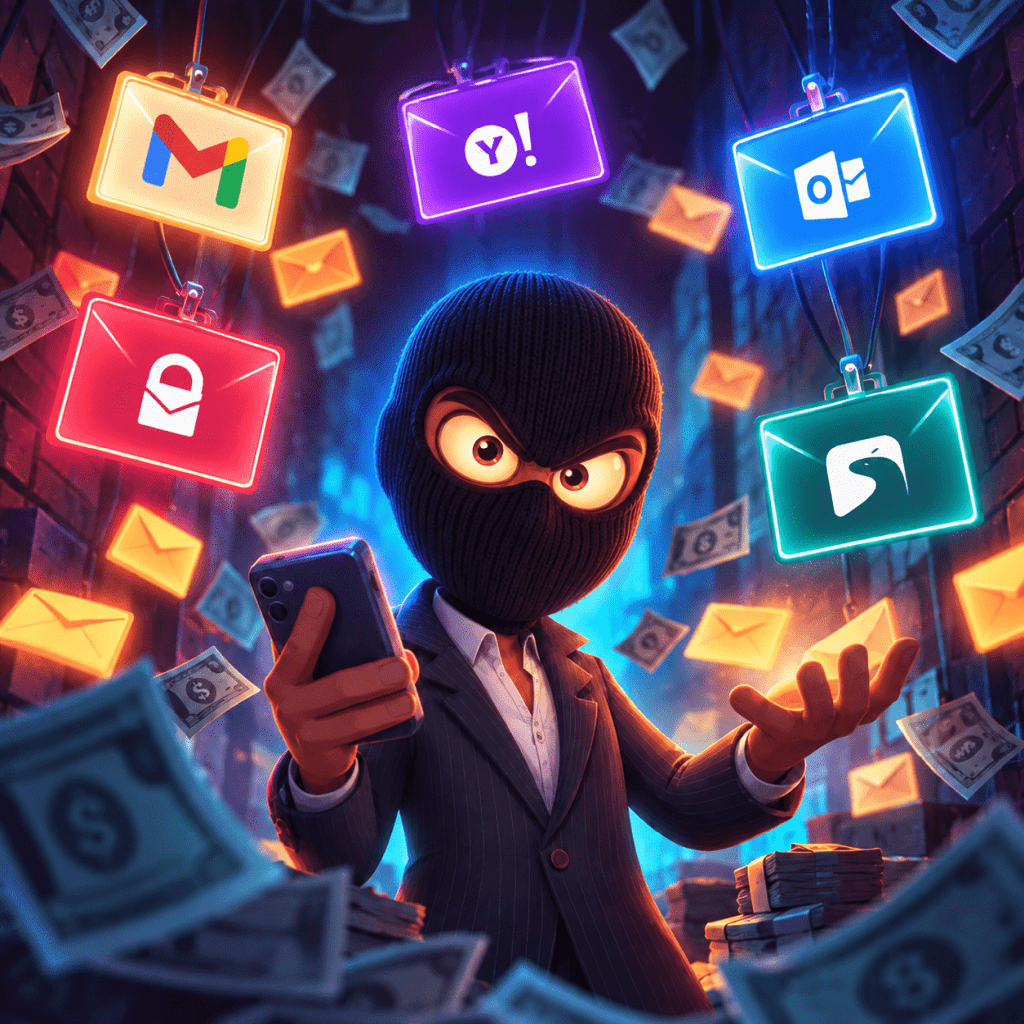
It costs nothing to create a Gmail account. No identity verification required. No phone number in many cases. No credit card. Just a made-up name and you're a brand-new, apparently legitimate email sender. For the price of zero, a fraudster has infrastructure.
Free email services - Gmail, Yahoo, Outlook.com, ProtonMail, Tutanota, and dozens more - are essential tools for billions of legitimate users. They're also the backbone of a remarkable proportion of online fraud.
How fraudsters exploit free email services:
🎭 Business Email Compromise using free domains - BEC actors frequently use free email addresses that superficially resemble legitimate business domains. A finance team receiving an urgent payment request from "ceo.johnson@gmail.com" or "accounts@company-corp.com" may not immediately notice the difference from the legitimate CEO's corporate address. The FBI documented $2.9 billion in BEC losses in 2024.
📧 Phishing campaigns at scale - Free email accounts can send thousands of phishing emails before being flagged. When one account is blocked, a new one takes seconds to create. The near-zero barrier to account creation means that email-based fraud infrastructure is essentially inexhaustible.
🔄 Fake identity establishment - An email address is the core identity credential for almost every online service. A fraudster with 50 free email accounts has 50 different online identities, each capable of creating accounts on social platforms, marketplaces, financial services, and communication tools.
📞 Social engineering campaigns - Fraudsters contact targets claiming to be banks, government agencies, utilities, or employers from free email addresses. The official-looking nature of the message body can distract from scrutiny of the sender's domain.
💼 Recruitment and job scams - Fake job offers and recruiter emails sent from free accounts promise high-paying remote work, leading to upfront payment demands, request for banking information, or money mule recruitment. The free email creates zero cost for the fraudster even with a very low response rate.
🔒 Account recovery and reset exploitation - When a free email account is created and used as a recovery contact, taking over that email account can cascade into takeovers of every service connected to it. Attackers who compromise a primary email account often find they now control the victim's entire digital life.
🤖 Bulk account creation with automation - Automated scripts create thousands of free email accounts using temp phone numbers and virtual credit cards. These are used for spam, fake reviews, fraudulent sign-ups for trial services, and mass phishing campaigns.
From a fraud detection perspective, free email providers present a genuine challenge. ProtonMail and similar privacy-focused services are legitimate tools for journalists, activists, and privacy-conscious users - but their anonymity features make them equally attractive to fraudsters seeking to evade tracing.
What can we do:
For organizations:
- Implement email authentication standards (SPF, DKIM, DMARC) on your own domains to prevent impersonation.
- For payment requests: enforce a callback verification policy - always call the requester at a known number before processing. Do not use contact information from the email itself.
- Flag emails from free webmail domains requesting financial transactions, HR data changes, or credential input - these warrant additional scrutiny regardless of the message content.
- Use secure email gateways that analyze sender reputation, domain age, and behavioral patterns.
For individuals:
- Check the sender's email address carefully, not just the display name. Display names can say anything; the actual address reveals more.
- Be skeptical of any urgent financial or personal information request arriving from a free email address - especially impersonating a company or institution.
- Never click "forgot password" links triggered by emails you didn't request, especially if they come to a free account used as recovery for sensitive services.
Free email is free for everyone - including people who shouldn't have it.